Senator Kennedy Fiercely Confronts Sally Yates Over Her Handling of FBI Surveillance Warrant
A fiery exchange erupted during a Senate Judiciary Committee hearing when Senator John Kennedy (R-La.) aggressively questioned former Acting Attorney General Sally Yates over her role in approving a controversial FBI surveillance warrant linked to the 2016 election investigation. The tense back-and-forth quickly drew attention online, with many viewers noting Kennedy’s sharp tone and Yates’s composed but defiant responses.
The clash centered on Yates’s approval of a Foreign Intelligence Surveillance Act (FISA) warrant that relied in part on the now-disputed “Steele dossier,” which contained unverified allegations about then-candidate Donald Trump’s ties to Russia. Kennedy pressed Yates repeatedly on whether she had personally verified the dossier’s accuracy before authorizing the warrant. “You’re investigating a president of the United States,” he said incredulously. “And you didn’t check to see if it was accurate?”
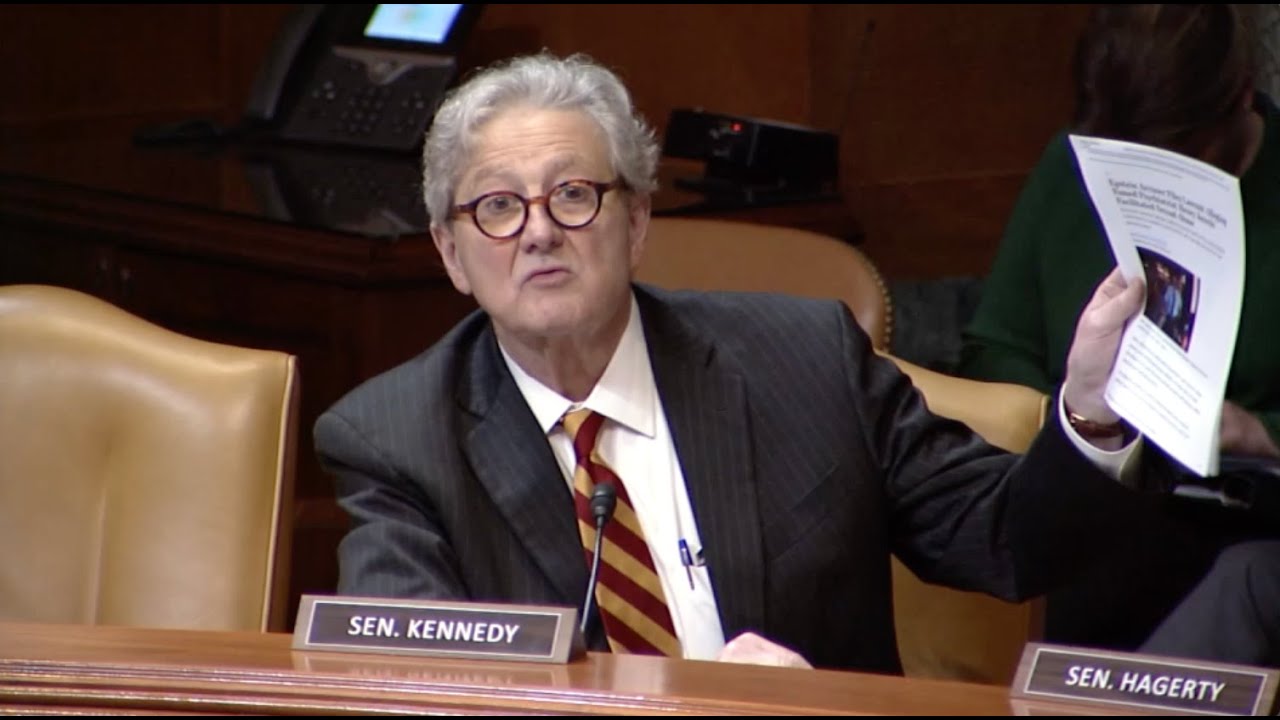
Yates calmly admitted that she had not independently fact-checked the document, explaining that such verification was the responsibility of FBI investigators. “No, I did not independently fact-check, and I’m not exactly sure how I would go about doing that,” she said. Her answer clearly frustrated Kennedy, who fired back with his now-viral remark: “Am I like a rock, only dumber?” — a rhetorical jab that underscored his disbelief at her reliance on others for verification.
As the questioning grew more intense, Kennedy accused Yates and other Justice Department officials of poor judgment and of damaging the FBI’s credibility by relying on weak or politically motivated sources. “The reputation of the FBI is tarnished because of this,” he declared. Yates, however, defended her decision, maintaining that she acted within proper legal procedures and relied on the expertise of career professionals. She also reminded the committee that her duty was to uphold the Constitution, even when that meant standing up to political pressure.
“I believe it’s the Attorney General’s responsibility to say no when the President asks for something unlawful or unconstitutional,” she said firmly. “And that’s what I did.”

Kennedy then shifted his questioning toward Yates’s attitude toward former President Trump, bluntly asking whether she “despised” him. Yates denied the accusation, saying, “No, I don’t despise anyone,” though she admitted that she did not “respect the manner in which he carried out the presidency.” The senator’s confrontational style drew mixed reactions — some praised him for holding officials accountable, while others criticized his aggressive tone as politically motivated grandstanding.
Throughout the hearing, Yates maintained her composure, refusing to be baited into partisan arguments. Her calm responses contrasted sharply with Kennedy’s frustration, creating one of the hearing’s most dramatic moments. Political analysts noted that while the senator succeeded in putting Yates on the defensive, her disciplined demeanor prevented him from scoring any decisive points.
Ultimately, the fiery exchange highlighted ongoing divisions over the Justice Department’s handling of the Russia investigation and the broader debate about government accountability. For supporters of Kennedy, the confrontation was a long-overdue challenge to what they view as political bias within federal law enforcement. For Yates’s defenders, it was a display of professionalism in the face of political hostility.
Regardless of where one stands, the moment captured the tension at the heart of American politics — where truth, accountability, and perception collide under the glare of national scrutiny.
