Riley Gaines vs. AOC: When a Social Media Spat Turns into a Cultural Flashpoint
A heated online feud between Representative Alexandria Ocasio-Cortez (AOC) and conservative activist Riley Gaines has captured national attention, highlighting once again the deep cultural divides surrounding women’s sports, gender identity, and the meaning of “real work.”
The clash began when Riley Gaines, a former NCAA swimmer and outspoken advocate for women’s sports, posted a photo of AOC at a Democratic rally with the caption: “We’re being destroyed from within.” The message, clearly aimed at progressive policies and leadership, struck a nerve. Within hours, AOC fired back on social media with a sharp jab referencing Gaines’ athletic career: “Maybe if you channeled all this anger into swimming faster, you wouldn’t have come in fifth.” Her remark alluded to Gaines’ 2022 NCAA tie for fifth place with transgender swimmer Lia Thomas — a moment that has defined much of Gaines’ activism since.
Instead of letting the insult pass, Gaines responded forcefully. She challenged AOC to a public debate on socialism, capitalism, and the fairness of transgender participation in women’s sports. Rather than accept, AOC escalated the exchange with another biting comment: “And I would like to challenge this person to get a real job.”
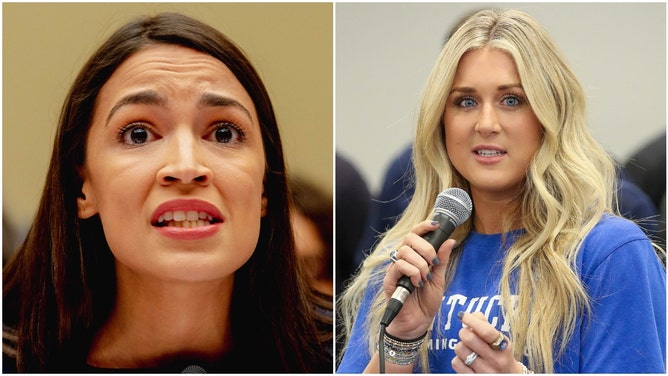
That single phrase — “get a real job” — instantly ignited outrage. Gaines replied that she does have a real job: she is a mother. “It’s the most important and rewarding job in the world,” she wrote, adding that if AOC were a mother herself, she might better understand the values Gaines stands for. The response went viral, resonating with many who felt motherhood and traditional family roles are too often dismissed in modern political discourse.
The feud quickly became about more than just two personalities trading barbs. It symbolized a broader cultural struggle — one between progressive and conservative values, between social-media performance and real-world identity. For AOC, the exchange risked appearing elitist or dismissive of women who dedicate their lives to parenting or advocacy outside conventional careers. For Gaines, it was a moment to position herself not just as a political activist but as a representative of everyday women who feel unheard in national debates about gender and fairness.
Critics of AOC argue that her decision to mock Gaines’ athletic performance and work status reflected poor judgment, especially from a sitting member of Congress known for championing women’s empowerment. Supporters counter that AOC’s sarcasm was aimed at highlighting Gaines’ role as a political provocateur rather than an athlete. Either way, the tone of the exchange overshadowed substantive discussion about sports policy, equity, or representation.
By week’s end, video clips, screenshots, and commentary about the feud dominated platforms like X (formerly Twitter) and TikTok. Conservative outlets praised Gaines for “exposing” AOC’s supposed hypocrisy, while progressive commentators accused Gaines of opportunistically weaponizing motherhood for political gain.
In truth, the episode revealed how easily serious issues can devolve into personality clashes in the digital age. What started as a disagreement over fairness in sports turned into a viral fight about identity, gender, and respect. Whether this feud truly “ended” anyone’s career is doubtful — but it certainly reaffirmed how personal and performative modern politics has become, where every post and comeback doubles as a political statement.
