Jasmine Crockett Floats “Career‑Ending” Senate Run as Texas Democrats Scramble
Texas Congresswoman Jasmine Crockett has stirred a political firestorm after announcing she is seriously considering a run for the U.S. Senate in 2026 — a move some strategists warn could be “career-ending” and has already sparked concern among Texas Democrats. Representing Dallas’s 30th Congressional District, Crockett has built a reputation as an outspoken progressive and rising star in the party. But her bold Senate ambitions may come with high stakes, and critics fear the decision could backfire spectacularly.
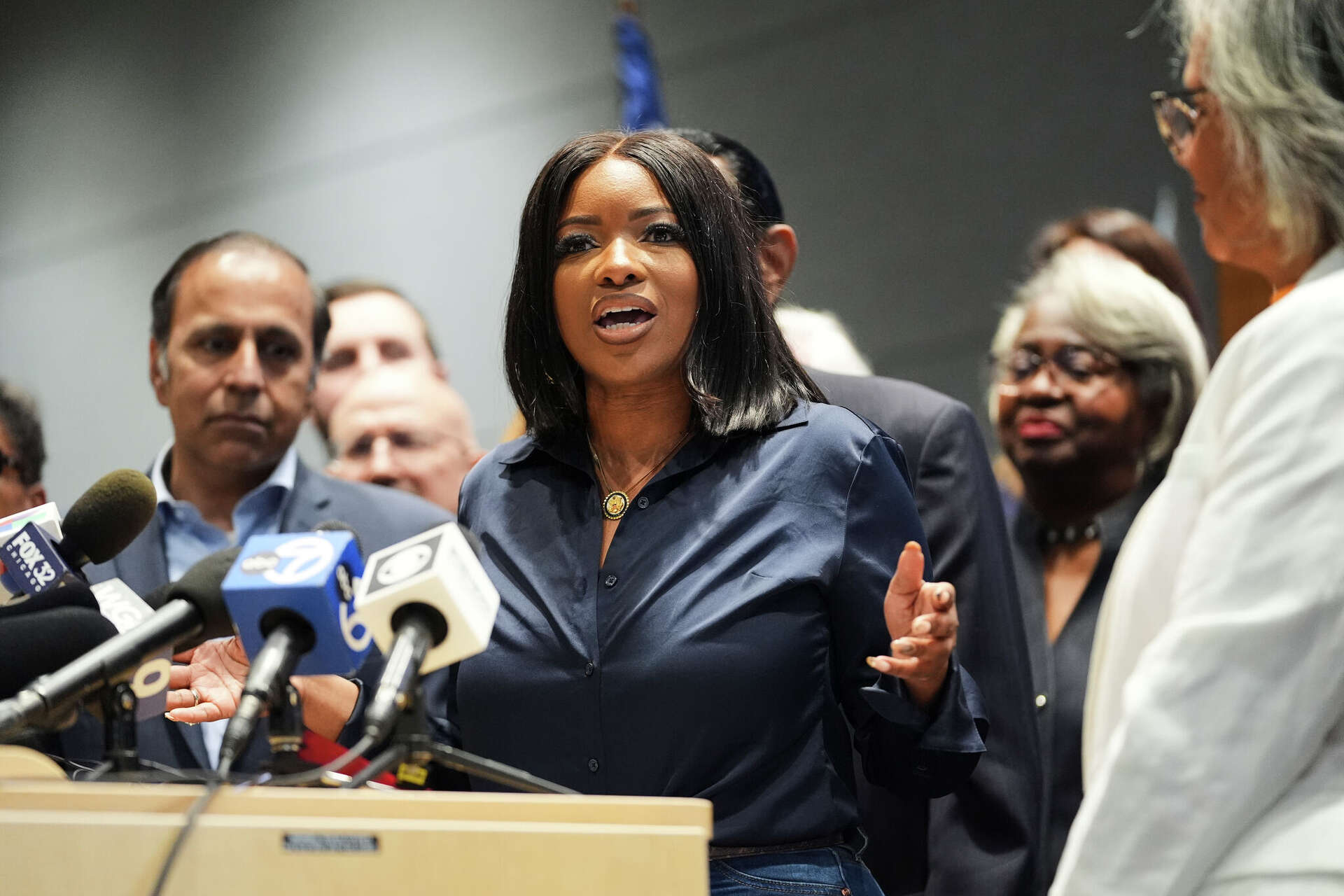
Crockett told reporters she is exploring the Senate race and emphasized her belief in expanding the electorate. “Every day there’s a poll that comes out that makes it clear that I can win the primary for the U.S. Senate race in Texas,” she said. While the remarks have energized some supporters, they have alarmed party insiders who worry that a statewide campaign in a predominantly Republican state could jeopardize both her political future and Democratic chances in Texas.
Political analysts note that while a Senate seat would elevate Crockett to national prominence, the risks are substantial. Texas remains a challenging terrain for Democrats in statewide races, and a loss could undermine her momentum in Congress. Moreover, Crockett’s outspoken style, once celebrated for its energy and advocacy, has sometimes drawn criticism from fellow lawmakers who question her alignment with party strategy.
The announcement comes on the heels of a previous setback in June 2025, when Crockett withdrew from consideration to become the top Democrat on the House Oversight Committee after failing to secure caucus support. That episode highlighted the limits of her influence within the party and raised questions about whether her ambitions might outpace her political capital.
Texas Democrats now face a delicate balancing act. Some argue that Crockett’s Senate bid could inspire new voter engagement and elevate the party’s profile. Others fear it could cost them a reliable House seat, given that her congressional district could be vulnerable if she vacates it. The internal debate underscores a larger dilemma for Democrats in Texas: whether to back bold progressive candidates with high visibility or to prioritize electability in a red-leaning state.
Despite the criticism, Crockett remains defiant. She has framed her potential Senate campaign as a moral and political imperative, telling supporters, “I’m looking. Because if you want to take my seat of 766,000 away, I feel like there has to be some karma in that to where I take your seat that is for 30 million away.” Her statement reflects both her confidence and her willingness to take political risks that could redefine her career.
As party leaders, donors, and PACs assess the implications of her possible Senate run, the clock is ticking. The decision will not only shape Crockett’s trajectory but could influence the Democratic Party’s strategy in Texas for years to come. Will the party rally behind a rising progressive star, or will pragmatism prevail in a state where the stakes could not be higher? For Crockett, and for Texas Democrats, the next few months could prove pivotal.
