Ben Shapiro’s Viral Takedown of AOC’s “Jewish Heritage” Claim Sparks National Debate
In the age of viral soundbites and identity-driven politics, few moments have ignited as much controversy as Ben Shapiro’s recent response to Congresswoman Alexandria Ocasio-Cortez’s (AOC) claim of Jewish heritage. What began as a cheerful Hanukkah celebration in New York quickly escalated into a nationwide debate about faith, authenticity, and the weaponization of identity in American politics.
.
.
.

A Holiday Surprise Turns Political Firestorm
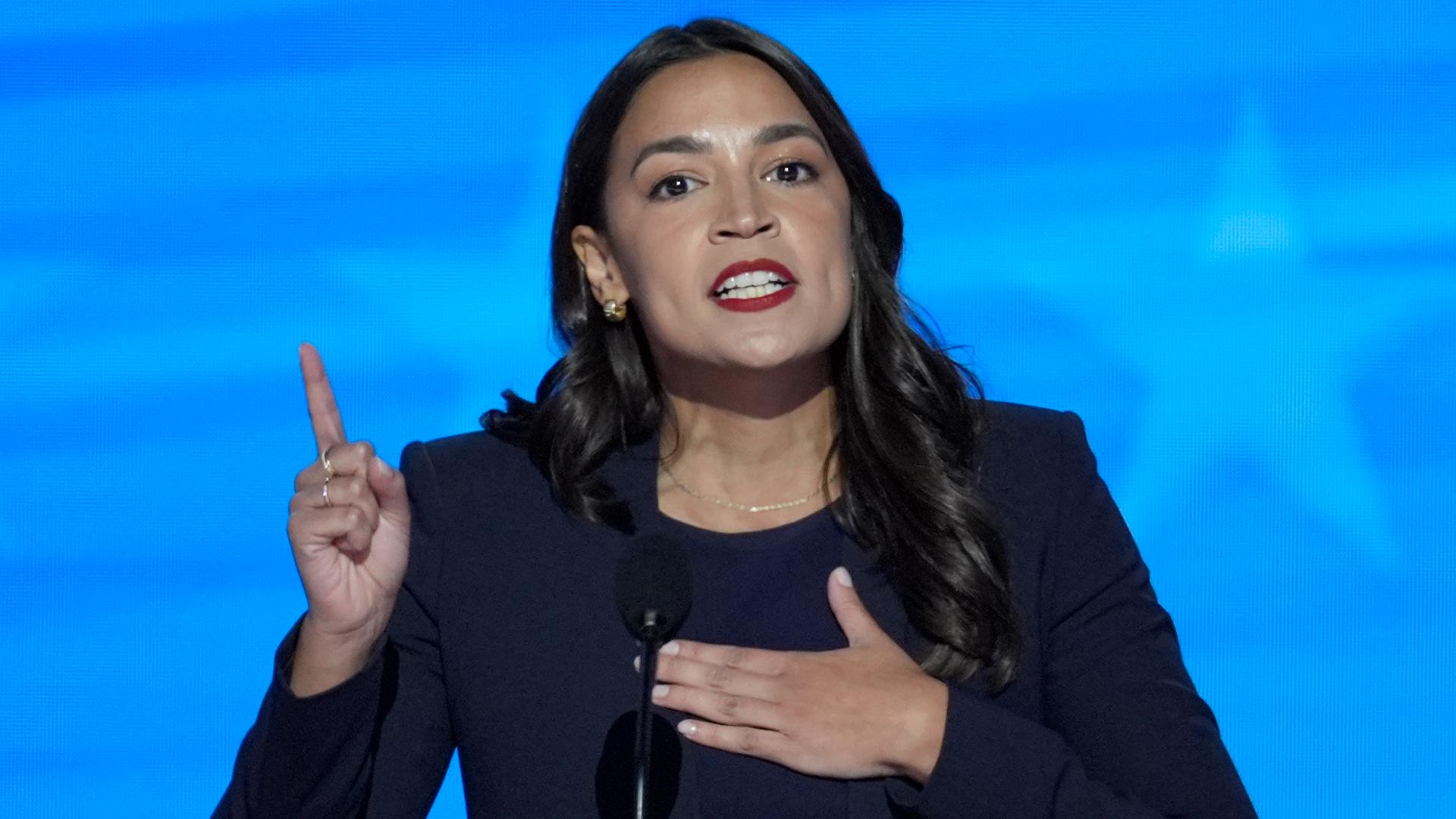
It was supposed to be a night of warmth and celebration. At a Hanukkah event in New York, Alexandria Ocasio-Cortez took the stage, her words echoing through a crowd eager for inspiration. Smiling, she revealed, “Generations ago, my family discovered we had Jewish roots.” The audience erupted in applause as she described hidden menorahs in Puerto Rican homes and whispered prayers, painting a cinematic portrait of her family’s secret heritage.
But while the crowd cheered, one man thousands of miles away was not convinced. Conservative commentator Ben Shapiro, known for his rapid-fire analysis and unapologetic critiques, saw the viral clip and responded with what would become one of the most talked-about moments of the year.
Shapiro’s Response: From Sentiment to Scandal
Within hours, Shapiro’s reaction exploded across social media. On his Daily Wire show, he accused AOC of engaging in “political theater,” suggesting that her claim was less about heritage and more about optics. “This isn’t about heritage,” Shapiro said. “It’s about hypocrisy.”
He compared AOC to other politicians—Hillary Clinton and John Kerry—who, according to Shapiro, conveniently discovered Jewish ancestry just in time for campaign season. His critique was surgical, cold, and impossible to ignore. Shapiro argued that politicians frequently play the “heritage card” when it suits their narrative, but ignore it when inconvenient.
Social Media Erupts: Identity or Opportunism?
The backlash was immediate and intense. Hashtags trended worldwide, with commentators on both sides scrambling to weigh in. Was AOC celebrating her roots or weaponizing identity politics? Shapiro’s takedown was hailed as a “masterclass in surgical precision,” while AOC’s supporters fired back, accusing him of betraying his own faith and obsessing over her for attention.
But Shapiro didn’t back down. Instead, he doubled down, shifting the conversation from religion to truth, image, and accountability. “Was AOC lying to make herself look good?” he asked, pulling back the curtain on what he called “the ultimate double standard.”
The Challenge: Debate or Deflection?
In a bold move, Shapiro publicly challenged AOC to a debate, offering $10,000 to a charity of her choice. “No gotchas, no ambushes, just ideas,” he promised. AOC responded with a single tweet, accusing Shapiro of “cat calling”—a remark that quickly became its own viral meme. Shapiro, unfazed, quipped, “I don’t think cat-calling is in the Orthodox Jewish playbook.”
The exchange became a symbolic clash between identity politics and accountability. Shapiro accused AOC of aligning herself with prominent anti-Israel voices in Congress, such as Ilhan Omar and Rashida Tlaib, while claiming solidarity with the Jewish community for applause. “You don’t get to claim solidarity with Jews one day and support people boycotting the Jewish state the next. That’s hypocrisy. Full stop.”

The Fallout: Silence and Scrutiny
As Shapiro’s critique spread, AOC’s team remained largely silent, issuing only brief statements and declining to engage directly. Political analysts speculated: Was AOC dodging the challenge because she couldn’t defend her position, or was she refusing to give Shapiro the attention he wanted? Either way, the silence spoke volumes.
Major news outlets picked up the story, and the narrative began to shift. What started as a heartfelt Hanukkah moment was now under the microscope, with headlines questioning the timing and sincerity of AOC’s claim.
Shapiro’s Broader Indictment: The Double Standard
On his show, Shapiro expanded the debate beyond AOC, indicting an entire political culture that, in his words, “uses heritage, race, gender, or religion not as personal truths, but as armor against accountability.” He highlighted the double standard: when progressives invoke identity, it’s praised as brave; when conservatives do the same, it’s mocked as exclusionary.
Clips of CNN anchors praising AOC’s connection to Jewish culture were juxtaposed with their criticism of Christian conservatives for mixing faith and politics. “They don’t want neutrality,” Shapiro said. “They want narrative control.”
Faith as Performance: The Viral Moment
The most viral moment of the week came when Shapiro sat down with a Jewish historian on his podcast. “Faith isn’t a flag you wave when it’s convenient. It’s something you live every day,” the guest remarked. The line spread like wildfire, sparking debates across TikTok, Twitter, and cable news.
Even some liberal commentators admitted the optics were bad. “If AOC wants to celebrate her Jewish roots, that’s fine,” wrote one columnist. “But when she’s aligned with anti-Israel activists, it muddies the message.”
AOC’s Response: Defiance or Deflection?
After a week of mounting pressure, AOC finally responded—not in a press conference, but with a lengthy post on X (formerly Twitter). “My heritage is not a debate topic. My ancestors lived in hiding. My family’s story is one of survival, not politics,” she wrote.
Her supporters rallied, but critics, led by Shapiro’s audience, pounced. Shapiro dissected her statement on air, noting the absence of any mention of her alliances with anti-Israel activists or her stance on the BDS movement. “Notice what’s missing,” he said. “No comment on the double standard, just another emotional appeal meant to deflect from the facts.”
The Reckoning: Sincerity vs. Strategy
Shapiro closed his coverage with a message that resonated far beyond his usual audience. “Heritage is sacred. It’s not a punchline. It’s not a prop. And if you use it to score political points, you dishonor the very people you claim to represent.”
Across social media, even those who disliked Shapiro found themselves agreeing. “If you use your heritage for clout, you owe that heritage respect,” one viral tweet read. The debate had shifted from AOC’s ancestry to a deeper question: When does cultural pride become political manipulation?
The Aftermath: A Cultural Battle
Cable news ran wall-to-wall coverage. CNN called the controversy “manufactured,” while Fox News dubbed it “a moment of moral clarity.” But in living rooms across America, ordinary people were asking, “When did heritage become a talking point?”
Shapiro’s final broadcast was quieter, more reflective. “It’s not about whether AOC has Jewish roots,” he said. “It’s about how easily politicians claim ancestry when it’s convenient and ignore it when it’s uncomfortable. That’s not heritage. That’s hypocrisy.”
Conclusion: Truth Beyond Applause
As the dust settled, one thing was clear: Ben Shapiro’s viral takedown had forced a conversation the media had long avoided. The clash between AOC and Shapiro was no longer just about one politician’s heritage—it had become a referendum on authenticity, accountability, and the role of identity in American politics.
In an era where applause often drowns out truth, Shapiro’s words echoed through the noise: “Heritage doesn’t make you honest. Character does. And when history looks back, it won’t remember who claimed what ancestry. It’ll remember who told the truth.”
What began as a simple holiday remark had become one of the defining cultural battles of the year—a clash between faith and politics, sincerity and strategy, and two voices who refuse to back down.
