Ashleigh Merchant Ruined Fani Willis — And She’s Just Getting Started
Atlanta — When attorney Ashleigh Merchant filed a motion in early 2024 to disqualify Fulton County District Attorney Fani Willis from the sweeping racketeering case against former President Donald Trump and his allies, few expected how dramatically it would shake Georgia’s legal and political establishment. What began as a procedural challenge quickly evolved into a crisis of credibility for one of the state’s most powerful prosecutors — and positioned Merchant as a force to be reckoned with in American criminal law.
Merchant, representing Trump co-defendant Mike Roman, alleged that Willis had appointed special prosecutor Nathan Wade while secretly maintaining a romantic relationship with him. She argued that this relationship created a clear conflict of interest and compromised the integrity of the prosecution. The filing triggered a storm of hearings, subpoenas, and public scrutiny that pulled back the curtain on Willis’s private life and professional decisions.
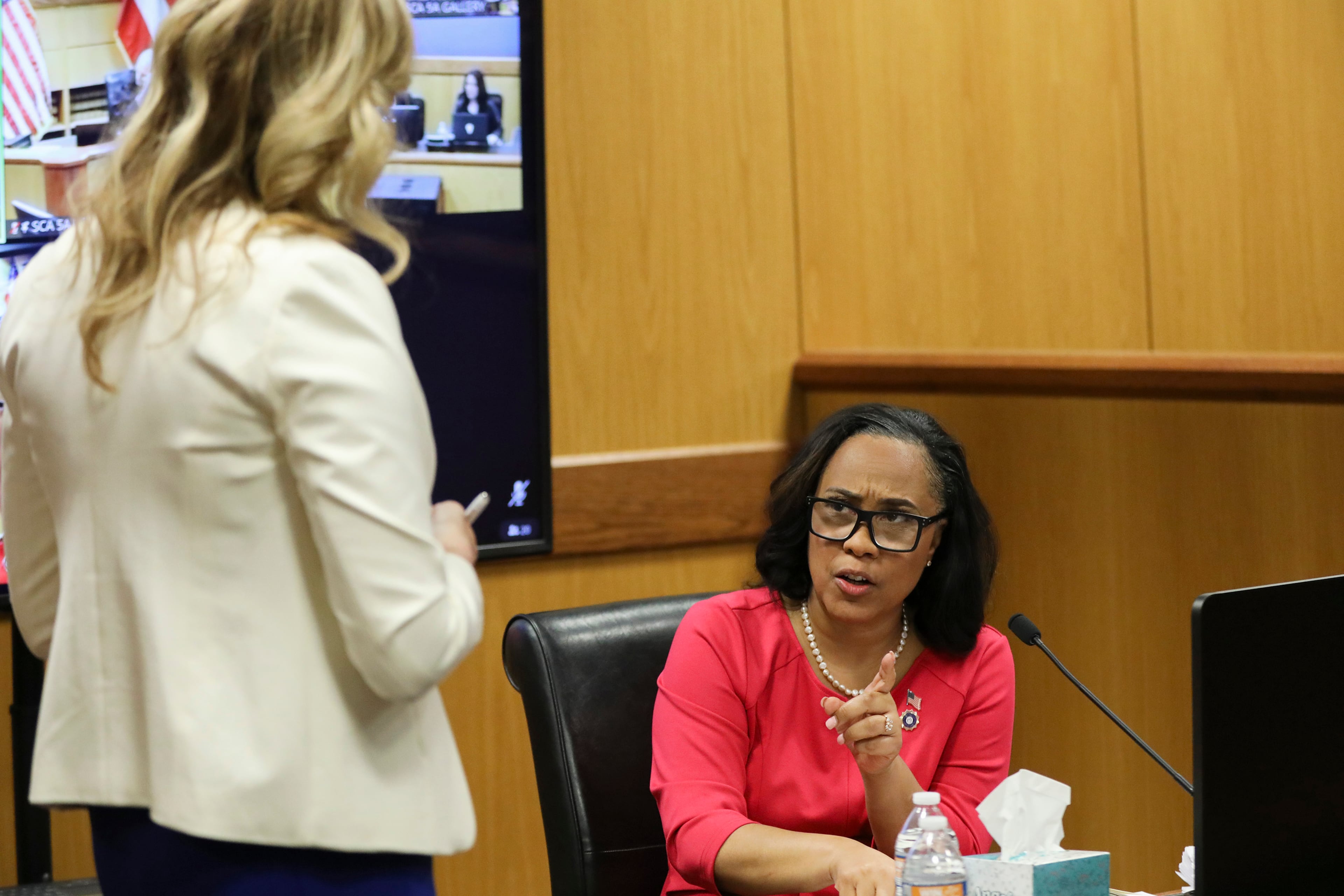
In March 2024, Judge Scott McAfee ruled that although Willis could remain on the case, her romantic partner, Wade, had to resign. His ruling described Willis’s actions as a “tremendous lapse in judgment” and said her conduct had created “an odor of mendacity.” Those words landed like a gavel heard across the nation. What had once seemed a confident and historic prosecution now appeared vulnerable — tarnished by questions about fairness, ethics, and transparency.
As the controversy deepened, the case began to stall. The prosecution’s momentum slowed, key hearings were delayed, and Willis’s once-formidable public image took a hit. The media, once sympathetic, began asking whether her decisions had permanently undermined public trust in her office. The damage wasn’t just reputational — it was structural. The defense, empowered by Merchant’s persistence, found new footing to challenge the entire case.
Then came another major blow. In early 2025, a Fulton County judge ruled that Willis’s office had violated Georgia’s open-records law by failing to turn over documents Merchant had requested. The court ordered Willis to pay more than $54,000 in attorney’s fees and declared that her office’s conduct had been “intentional, not done in good faith.” The decision reinforced Merchant’s narrative: that Willis’s office had not been transparent or accountable.
By the end of the year, the fallout grew even more severe. A Georgia appeals court determined that Willis should indeed be disqualified from the Trump case, citing the “appearance of impropriety” stemming from her relationship with Wade. It was an extraordinary reversal — and a vindication for Merchant, whose initial claims had been dismissed by some as politically motivated. Instead, her meticulous legal work had exposed deep flaws in one of the nation’s most high-profile prosecutions.
For Ashleigh Merchant, this saga represents more than a courtroom victory. It has made her a symbol of tenacity — a defense lawyer unafraid to challenge powerful institutions and demand accountability at the highest levels. And as new investigations and civil suits swirl around the Fulton County DA’s office, Merchant shows no sign of slowing down.
What began as a single motion has now evolved into a broader reckoning for Fani Willis. Merchant didn’t just challenge the prosecutor — she dismantled her credibility, reshaped Georgia’s legal landscape, and proved that even the most powerful figures in justice can fall when confronted with persistence, precision, and the power of the law.
